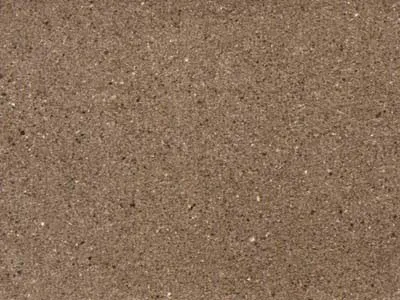
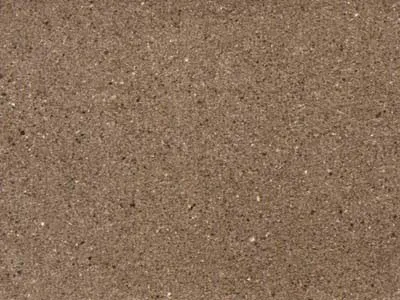
Petrographic description
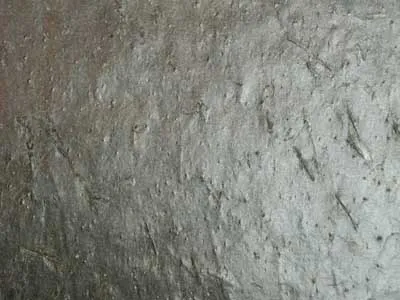
Rührsandstein is a Sandstone quarried in Germany, catalogued in the Marmi di Carrara atlas under the international reference ICDESA00369. Its dominant tone is grey.
Like every sandstone, it is supplied as raw blocks, gangsaw slabs in 2 and 3 cm and cut-to-size pieces made in our Carrara plants. Recommended finishes: honed, sawn, sandblasted, bush-hammered, split-face. Typical applications: exterior paving, façades, garden walls, rustic interiors.
Availability varies with the quarry campaigns: before quoting we check current stock, block sizes and the selection grade, and we send photos of the actual slabs. Price and transport are confirmed by our technical office within one working day.
Ruhr Sandstone: complete guide
Overview
Ruhr Sandstone is a compact quartz sandstone with a grey-green tone, among the hardest in its family. It is chosen for paving, steps and masonry that must last outdoors with an understated, natural look.
History and origin
It comes from the Ruhr basin, in western Germany, where Carboniferous sandstones outcrop together with the strata that shaped the region's mining history. It has long been used in local construction for plinths, walls, thresholds and engineering works. Today it is also finding a place in urban landscapes and contemporary gardens. Marmi di Carrara supplies it on request.
Appearance
The background is grey with greenish nuances, sometimes crossed by brown or rust-coloured spots due to iron oxides. The grain is fine and regular, with slight layering that can be seen above all on split sides. The intensity of the grey varies between batches; brushed or sandblasted finishes retain an even tone, while bush-hammered or split finishes make the surface more rustic and non-slip.
Uses
It is suitable for outdoor paving, steps, kerbs, dry-stone walls, façade cladding and rustic-style interior floors. It withstands heavy foot traffic well; for kitchen worktops it is less advisable than a granite because the matt surface absorbs grease and stains more easily.
Care and maintenance
Outdoors, periodic cleaning with water and a brush is enough to remove dirt, moss and deposits. A water- and oil-repellent treatment limits absorption and makes stains easier to clean; indoors use neutral detergents.
- Classification
- compact quartz sandstone (sedimentary rock)
- Density
- approx. 2,500-2,600 kg/m³ (indicative)
- Mohs hardness
- quartz grains ~7; very hard-wearing rock for a sandstone
- Water absorption
- low to medium
- Main use
- outdoor and indoor
- Acid resistance
- good
FAQ
Is Rührsandstein suitable for outdoor use?
Sandstone: a classic outdoor stone for paving and walls. Tell us the climate and exposure of the project and we will recommend the right finish and thickness.
What is the price of Rührsandstein per m²?
Indicative price from €115/m² for polished 2 cm slabs ex works Carrara, VAT excluded. The final figure depends on selection, block size, finish and quantity; a personalised quote is free.
How is Rührsandstein shipped from Italy?
Slabs travel in wooden A-frames inside 20-foot containers (about 25 tonnes); blocks ship loose or in open-top containers. We quote FOB, CIF or door-to-door to any port or site.